
Skin enhancement procedures are professional treatments intended to improve the appearance, texture, tone, or hydration of the skin without necessarily changing facial identity. For the most natural glow, the strongest options are usually conservative treatments that improve light reflection and skin quality—such as superficial chemical peels, nonablative laser or light treatments, microneedling, and carefully selected injectables—rather than aggressive resurfacing or overcorrection. The American Academy of Dermatology (AAD) emphasizes that results depend on skin type, the condition being treated, sun protection, and the practitioner’s expertise; the American Society of Plastic Surgeons (ASPS) also reports millions of minimally invasive cosmetic procedures performed annually, confirming the relevance of informed treatment selection.
Improve Skin Enhancement Procedures—Natural Glow Through Skin Quality
“Natural glow” is not a single medical outcome. In dermatology, it generally describes more even pigmentation, smoother texture, reduced dullness, balanced hydration, and a subtle improvement in firmness or reflectivity. Skin enhancement procedures are therefore best evaluated by how naturally they improve these characteristics—not simply by how dramatic the immediate change appears.
The most natural-looking results typically share four traits: gradual improvement, preservation of facial movement and proportions, limited downtime, and a treatment plan matched to the patient’s skin type. A consultation should also distinguish between dullness caused by dehydration, uneven pigment, acne scarring, redness, fine lines, or loss of volume because each concern responds to different procedures.
Superficial Chemical Peels for Brightness
A superficial chemical peel applies a controlled solution—often containing glycolic acid, lactic acid, salicylic acid, or a combination of acids—to remove or loosen damaged outer skin cells. The result can be a smoother surface and more even tone, which may create a visible glow without altering facial structure.
These peels are particularly useful for mild dullness, uneven pigmentation, and some forms of acne. The AAD notes that superficial peels commonly involve redness, scaling, or irritation for a limited period, while medium and deep peels require substantially more recovery and carry greater risks. A series of mild treatments is often more natural-looking than one aggressive treatment, especially for people prone to post-inflammatory hyperpigmentation.
Microneedling for Texture and Subtle Firmness
Microneedling uses fine needles to create controlled microscopic punctures in the skin, stimulating a wound-healing response that can support collagen remodeling. It is commonly used for acne scars, enlarged pores, uneven texture, and fine lines. Because it does not remove an entire layer of skin or add volume, improvement is usually gradual and preserves the patient’s natural facial expression.
The U.S. Food and Drug Administration (FDA) distinguishes between medical microneedling devices and cosmetic rollers, and it advises consumers to verify the device, provider training, and intended use. Temporary redness and sensitivity are common. Infection, scarring, or pigment changes are less common but possible, particularly when treatment is performed in a nonsterile setting or at excessive depth.
Nonablative Laser and Light Treatments for Tone
Nonablative lasers heat targeted tissue beneath the surface while leaving much of the outer skin intact. Intense pulsed light (IPL) uses multiple wavelengths to address selected pigment and vascular concerns. Fractional nonablative lasers create microscopic treatment zones that can improve texture and stimulate collagen with less downtime than fully ablative resurfacing.
These procedures can be effective for sun-related discoloration, redness, fine lines, and uneven texture, but the best treatment depends heavily on wavelength, energy settings, and skin tone. The AAD cautions that people with darker skin may face a higher risk of burns or long-lasting pigment changes from certain lasers. A test spot, conservative settings, and a clinician experienced with the patient’s Fitzpatrick skin type can make the result safer and more natural.
Hydrate Skin Enhancement Procedures—Natural Glow With Conservative Injectables
Injectable treatments can contribute to a natural glow when they correct a specific structural or hydration-related concern rather than broadly changing facial proportions. Their value is greatest when the objective is defined in advance—for example, softening a deep fold, restoring modest cheek support, or improving the appearance of thin lips without creating excessive fullness.
Hyaluronic Acid Fillers for Strategic Volume
Hyaluronic acid (HA) fillers are gels injected beneath or within the skin to add volume, soften lines, or improve contour. HA naturally occurs in the body and is also associated with water retention, but filler placement is primarily a structural intervention rather than a substitute for skincare hydration.
ASPS statistics identify HA fillers as one of the most frequently performed minimally invasive cosmetic treatments in the United States. The most natural outcomes generally use small amounts placed in anatomically appropriate areas. Overfilling can produce facial heaviness, altered proportions, or an unnatural reflective appearance. The FDA warns that vascular occlusion, tissue injury, and, rarely, vision complications can occur, making licensed medical care essential.
Neuromodulators for Smoother Expression Lines
Neuromodulators such as botulinum toxin temporarily reduce activity in selected muscles. They are primarily used for dynamic lines caused by repeated expression, including forehead lines, glabellar lines, and crow’s-feet. They do not directly improve dehydration, pigmentation, or rough surface texture.
ASPS has consistently listed botulinum toxin injections among the most common minimally invasive procedures. A natural result depends on preserving appropriate movement and treating only the muscles that create the concern. Excessive dosing can cause a frozen appearance or asymmetry, so conservative treatment and a follow-up adjustment are often preferable to trying to achieve the final result in one visit.
Select Skin Enhancement Procedures—Natural Glow by Concern and Skin Type
There is no universally superior glow procedure. The best choice is the one that matches the dominant problem, the patient’s tolerance for downtime, and the likelihood of pigment or scarring complications. A treatment that works well for sun spots may be inappropriate for active acne, rosacea, melasma, or a history of keloid scarring.
- For mild dullness and roughness, a superficial peel or professionally supervised exfoliation plan may offer a restrained improvement.
- For acne scars and uneven texture, microneedling or fractional resurfacing may be more appropriate than fillers alone.
- For redness or selected sun spots, IPL or a vascular or pigment-targeting laser may help, provided the clinician evaluates skin tone and the cause of discoloration.
- For early expression lines, a conservative neuromodulator can smooth movement-related creases while preserving expression.
- For localized volume loss, small amounts of HA filler may restore balance, but filler should not be used simply because a trend or social-media image suggests it.
Sun Protection as the Foundation of Glow
Daily photoprotection is essential because ultraviolet exposure contributes to uneven pigmentation, collagen breakdown, and premature texture changes. The AAD recommends broad-spectrum, water-resistant sunscreen with an SPF of 30 or higher, along with shade and protective clothing. Without consistent protection, the benefits of peels, lasers, and microneedling may be reduced and pigment problems may recur.
Provider Selection and Treatment Timing
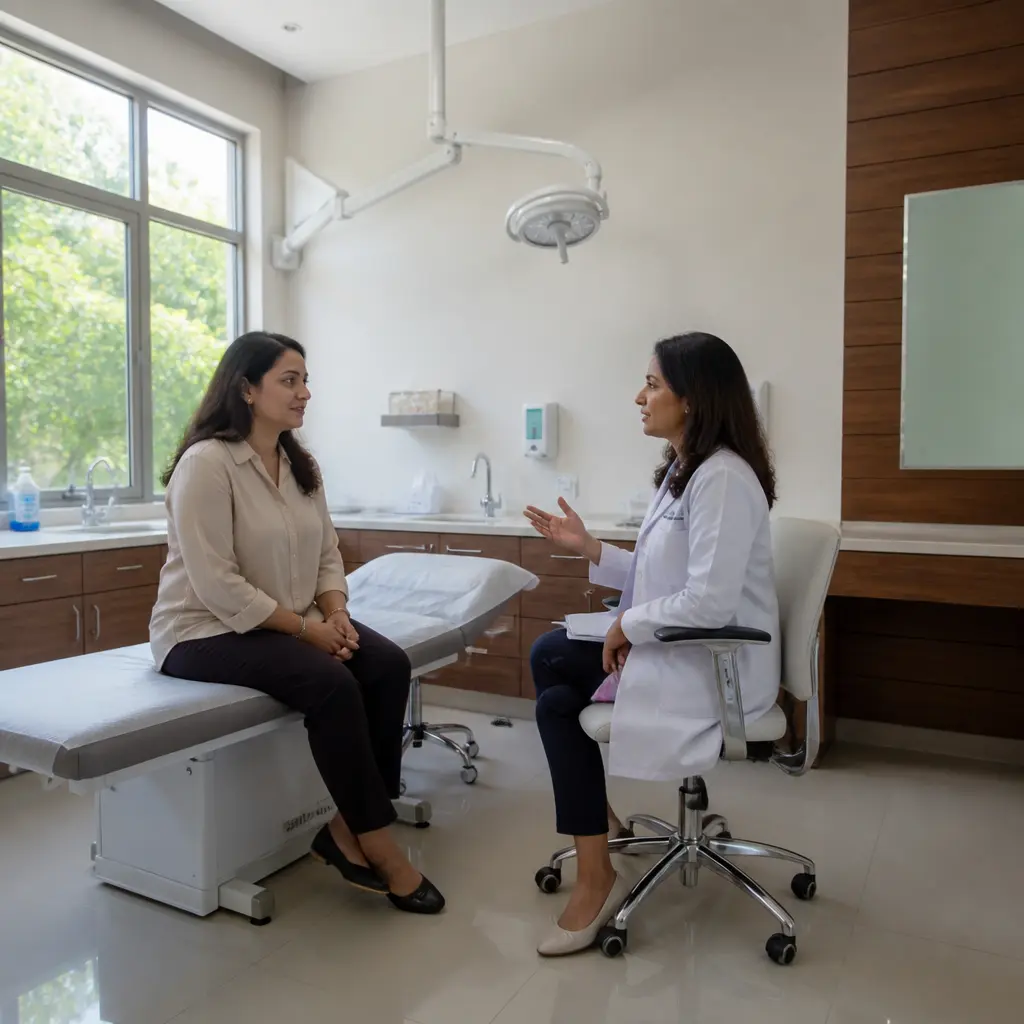
A board-certified dermatologist or appropriately qualified medical professional should review medications, pregnancy status, active skin disease, previous reactions, scarring history, and expectations before treatment. Patients should ask which device or product will be used, how many sessions are typical, what downtime to expect, and what complications require urgent attention.
Timing also affects naturalness. Redness, swelling, peeling, or bruising may temporarily make a procedure look less subtle before the final result develops. Planning treatments away from major events and avoiding aggressive combinations in a single appointment can reduce avoidable irritation.
Evaluate Skin Enhancement Procedures—Natural Glow by Evidence and Expectations
Consumers should be cautious with claims that promise permanent radiance, poreless skin, or results identical to filtered photographs. Clinical studies often measure specific outcomes—such as wrinkle scores, pigment intensity, scar appearance, or patient satisfaction—rather than “glow” as a standardized endpoint. Before-and-after photographs can be useful, but they are affected by lighting, makeup, camera angle, and skin preparation.
A practical evaluation compares improvement with cost, downtime, maintenance, and risk. A conservative series of treatments may provide a more believable result than a single high-intensity session. At-home care, including gentle cleansing, moisturizer, prescribed actives when appropriate, and sunscreen, remains important for maintaining any procedural benefit.
Conclusion: Skin Enhancement Procedures—Natural Glow With Restraint
The most natural glow usually comes from improving skin quality rather than dramatically changing facial shape. Superficial chemical peels can brighten, microneedling can refine texture, nonablative lasers and IPL can address selected tone concerns, and conservative HA fillers or neuromodulators can correct specific structural or expression-related issues. The safest plan connects the procedure to a clearly defined concern, accounts for skin type and downtime, and includes diligent sun protection.
Anyone considering treatment should seek an individualized assessment from a qualified clinician, request realistic before-and-after examples, and confirm the product or device being used. Further reading from the AAD, FDA, and ASPS can help patients compare benefits, limitations, and safety considerations before making a decision.
Sources: American Academy of Dermatology, Chemical Peels: FAQs, https://www.aad.org/public/cosmetic/younger-looking/chemical-peels; American Academy of Dermatology, Microneedling: What You Need to Know, https://www.aad.org/public/cosmetic/safety/microneedling; American Academy of Dermatology, Laser Skin Resurfacing, https://www.aad.org/public/cosmetic/younger-looking/laser-resurfacing; American Academy of Dermatology, Sunscreen FAQs, https://www.aad.org/media/stats-sunscreen; U.S. Food and Drug Administration, Dermal Fillers, https://www.fda.gov/medical-devices/aesthetic-cosmetic-devices/dermal-fillers-soft-tissue-fillers; U.S. Food and Drug Administration, Microneedling Devices, https://www.fda.gov/medical-devices/cosmetic-devices/microneedling-devices; American Society of Plastic Surgeons, Plastic Surgery Statistics Report, https://www.plasticsurgery.org/news/plastic-surgery-statistics